London Fashion Week, without the barriers
Fashion26 October 2026
AuthorLydia Freeman
Photos@biglobalofficial
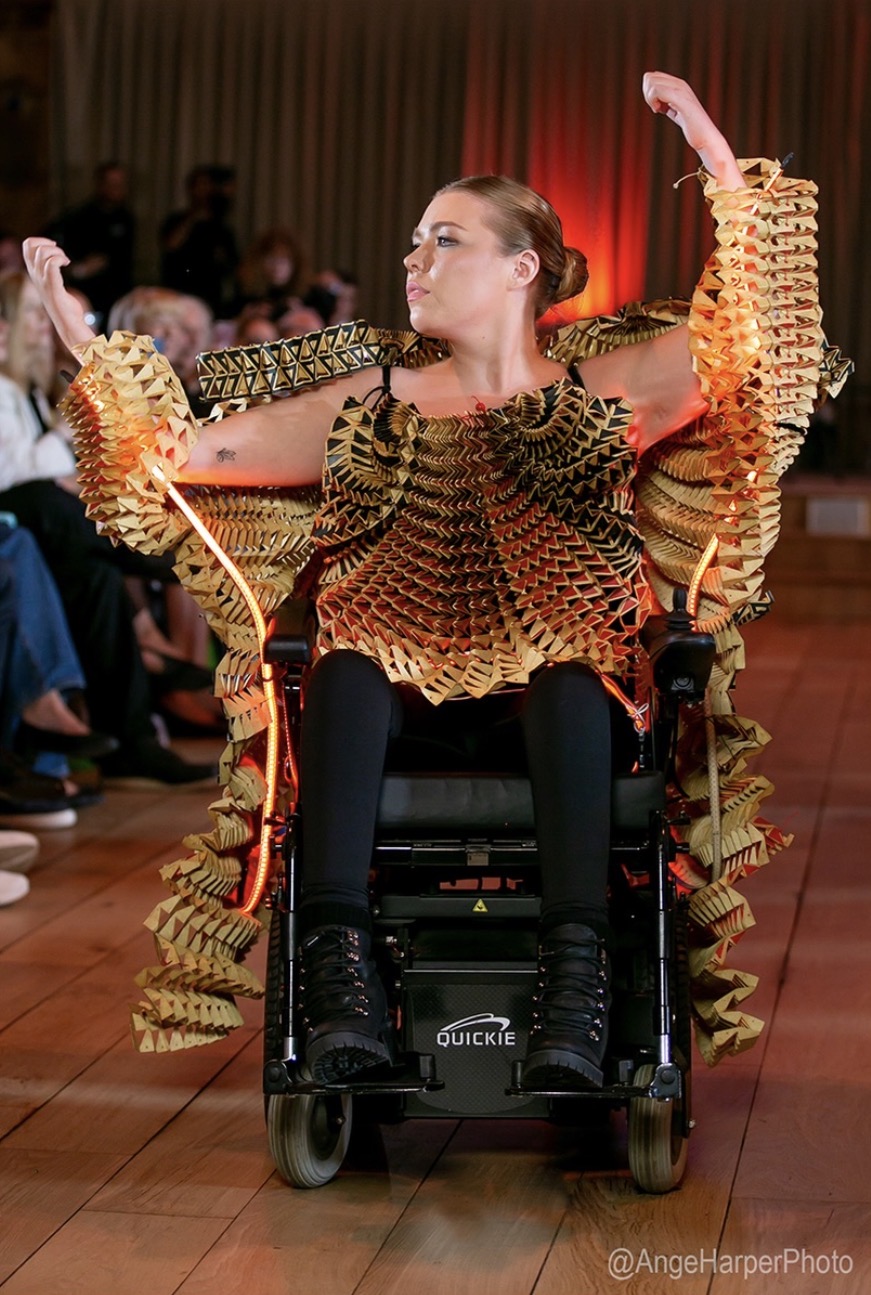
Adaptive clothing, expressive walking sticks and wearable tech: at Bullock Inclusion Global’s show, accessibility belongs on the runway.
I
t’s no secret that London Fashion Week attracts millions of fashion enthusiasts, aspiring designers, high-end models and luxury brands. However, in recent years, the event has increasingly become a platform for disability inclusion, thanks to designers and organisations challenging traditional perceptions of fashion and accessibility.
One organisation helping to drive this change is Bullock Inclusion Global, a Community Interest Company that hosts inclusive fashion events and promotes campaigns and content centred on inclusion, accessibility and sustainability. Yet, what stands out about the organisation is not simply the message it promotes, but also the people behind it.
Founded by Samanta Bullock in early 2020, Bullock Inclusion Global has developed into an international platform for inclusive fashion, drawing on Bullock’s experience as a Paralympic-level athlete and her extensive work as an inclusive fashion model. Through its initiatives, the organisation seeks to create opportunities for greater representation and challenge the barriers that have historically excluded disabled people from the fashion industry.
The organisation’s most recent show took place at St Mary’s Church in Marylebone on 18 September. It was hosted by Louise Hunt Skelley, a former professional wheelchair tennis player, sports commentator, inclusion advocate and author. Having members of the disabled community actively involved in the show does more than reinforce Bullock Inclusion Global’s message. It gives that message greater authenticity, ensuring that disabled people are not simply being represented, but are actively participating in shaping the industry’s future. It is a reminder that genuine inclusion means creating opportunities for people to be seen, heard and involved.
The event showcased brands rethinking the relationship between fashion, accessibility and everyday life. Each brought a different perspective to the conversation, demonstrating that inclusive design can address a wide range of needs without compromising on style.
Hope Tech: Making Mobility More Accessible
Hope Tech develops hands-free mobility technology designed to help visually impaired people detect hazards and navigate their surroundings. During the show, models showcased the device on the runway, bringing greater visibility to technology that can support independence and accessibility.
Its presence highlighted an important point: mobility and assistive technology deserve a place in the fashion conversation. These products are not simply functional tools; they can also be incorporated into personal style and self-expression. Practicality and fashion should not have to exist separately.
Although inclusive fashion aims to represent the broad spectrum of disability, brands such as Hope Tech also address specific accessibility needs. Featuring products designed for particular communities allows the conversation to become more tangible, helping audiences recognise that inclusion is not a one-size-fits-all concept. Different people require different solutions, and those needs deserve to be acknowledged.
Intotum: Designing Clothing Around Disabled People
Intotum is a multi-award-winning adaptive fashion brand that creates clothing with and for disabled people, including children. Founded by Hanan Tantush, the brand focuses on making clothing more accessible for people with a variety of needs, including wheelchair users, people with limb differences and prosthetics, and those who require feeding-tube access or clothing that accommodates ostomies and bloating.
The inspiration behind Intotum came from a deeply personal experience. After witnessing the impact cancer had on her grandfather, Tantush recognised how limited his clothing options became as his medical needs changed. Comfort, practicality and personal style were not always easily found together, highlighting a wider gap in the fashion industry.
This experience inspired her to explore how clothing could better accommodate people whose needs are often overlooked by mainstream fashion. Intotum was born out of that realisation, with a focus on creating garments that work for people's bodies and circumstances rather than expecting people to adapt to conventional clothing.
Since its founding, the brand has received industry recognition, including being named among the nation's favourite businesses and becoming a finalist in two categories at the Drapers Awards 2026, alongside other awards and achievements.
Intotum demonstrates why adaptive fashion matters: clothing should be an everyday necessity, but it is also a means of expressing confidence and functionality.
Neo Walk Sticks: Transforming the Perception of Mobility Aids
Founded in 2010, Neo Walk Sticks is an inclusive brand dedicated to changing how mobility aids are perceived. The team designs and produces handcrafted acrylic walking sticks, supplying customers in more than 28 countries. The brand was founded by Lyndsay Watterson following her experience of losing her leg because of an MRSA infection. Frustrated by the dull, clinical-looking walking sticks available to her, she recognised that mobility aids offered little opportunity for personal expression. Rather than accepting the options available, she set out to create alternatives that were distinctive, colourful and stylish.
Since the inclusive and creative company was established, they have won the Entrepreneur of Excellence Award at the National Diversity Awards 2023, and Lyndsay herself has won the North of England Businesswoman of the Year 2023 and won the National Business Women's Awards 2025.
Neo Walk has built high-profile relationships with prominent Hollywood figures, elevating stylish mobility aids onto global red carpets. One of the clients they’ve attracted is actress Selma Blair, known for her roles in Legally Blonde, Cruel Intentions and The Sweetest Thing. Blair was diagnosed with multiple sclerosis in 2018 and was one of the earliest high-profile Hollywood stars to showcase Neo Walk canes. She has frequently used their distinctive clear "champagne-bubble" acrylic cane at public appearances and high-profile media events.
The groundbreaking work showcased at London Fashion Week proves that accessibility and high fashion belong on the same stage. Considering these are just a few of the many amazing brands featured in Bullock Inclusion’s fashion show, it is clear that the organisation has become a powerful catalyst for widespread industry change. Under the leadership of Samanta Bullock, this collaborative platform is successfully dismantling the barriers that have historically excluded the disabled community from the runway.