The Clean Girl Died. Capitalism Survived.
FashionFashion17 October 2026
AuthorKitana M. Crowelle
Fashion has abandoned restraint for excess. But behind the spectacle of Spring/Summer 2027 lies a familiar truth: the aesthetics of wealth change. Its politics do not.
F
ashion has abandoned the aesthetics of restraint. But in an industry confronting its own economic contradictions, is excess a declaration of freedom or simply another way to sell privilege?
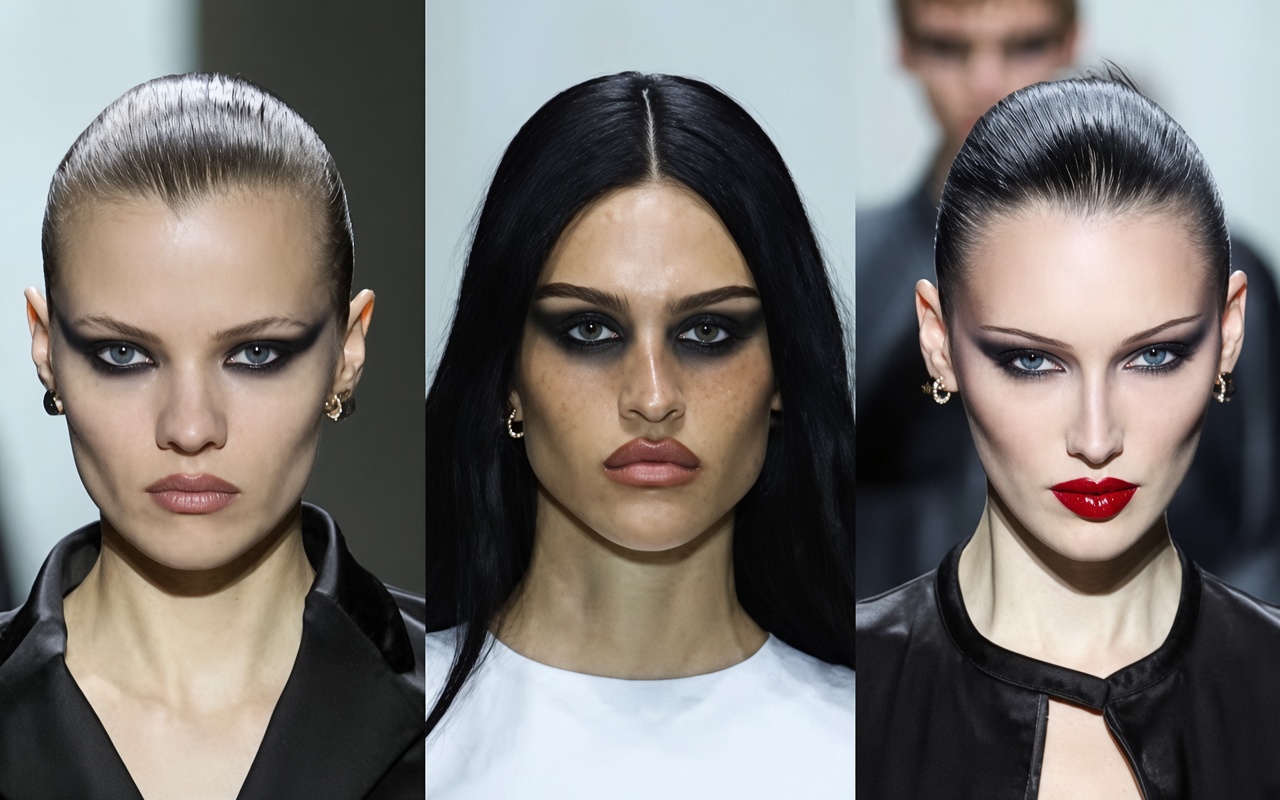
The clean girl is dead. Not because women suddenly developed an appetite for excess, but because the economics of looking understated have become increasingly difficult to justify.
For the better part of five years, fashion sold restraint as sophistication. An expensive white T-shirt, a severe bun, and an absence of visible effort. Wealth, apparently, was most convincing when it pretended not to exist. What began as ean aesthetic preference became a peculiar moral proposition: that women who consumed discreetly were somehow more intelligent than those who did not.
The Spring/Summer 2027 collections suggest the industry has reconsidered.
The clean girl is dead. Not because women suddenly developed an appetite for excess, but because the economics of looking understated have become increasingly difficult to justify.
For the better part of five years, fashion sold restraint as sophistication. An expensive white T-shirt, a severe bun, and an absence of visible effort. Wealth, apparently, was most convincing when it pretended not to exist. What began as ean aesthetic preference became a peculiar moral proposition: that women who consumed discreetly were somehow more intelligent than those who did not.
The Spring/Summer 2027 collections suggest the industry has reconsidered.
At Gucci, Demna staged his show inside a purpose-built boutique, presenting a cast of bourgeois characters whose wardrobes betrayed considerably more personality than restraint. Tartan, equestrian references, and exaggerated proportions amounted to a portrait of class consciousness with its inhibitions removed. The setting was hardly incidental. Gucci was not simply selling the clothes. But rather staging the act of consumption itself.
Prada approached the question differently. Miuccia Prada and Raf Simons transformed the skirt into an exercise in contradictions: austere silhouettes disrupted by crystals, embellishment, and unexpected construction. At Saint Laurent, Anthony Vaccarello dispensed with discretion altogether, sending out gold-drenched silhouettes that made conspicuous consumption look almost confrontational.
After seasons devoted to making money invisible, fashion appeared determined to show precisely what it could buy. The timing deserves scrutiny.
Luxury is experiencing a crisis of legitimacy. Years of aggressive price increases have alienated aspirational consumers, while slowing demand has exposed the limitations of selling exclusivity at an industrial scale. According to Bain & Company, roughly a fifth of luxury consumers have withdrawn from the market since 2022. Meanwhile, accessible fashion is gaining ground.
The industry's response? Make desire visible again.
There is an uncomfortable political logic here. Luxury flourished during a period of inflation and financial anxiety, offering an aesthetic of fiscal responsibility at prices that contradicted the premise. Its successor arrives amid the same economic disparities, only now the fantasy is unapologetic abundance.
The vocabulary has changed. The power structure has not.
More revealing still is the proposition that maximalism represents individuality. In an industry increasingly dependent on algorithmic visibility, recognisable products, and manufactured cultural moments, eccentricity is as commercially convenient as minimalism once was. A woman wearing an enormous gold collar may appear more liberated than one carrying an anonymous leather tote. Both remain participants in a carefully engineered economy of aspiration.
That does not make the shift meaningless. Fashion needs antagonism. It needs clothes that provoke argument rather than merely communicate purchasing power through an approved set of neutral colours. But the death of the clean girl should not be mistaken for the death of conformity. Fashion has simply discovered that, after years of asking women to demonstrate their status through restraint, there may be more money in encouraging them to flaunt it.
The clean girl did not die in a cultural revolution but slowly yet surely became commercially inconvenient.