The Signature Scent Is Dead. Beauty Wants You to Buy a Wardrobe.
Beauty3 October 2026
AuthorAleah Ann Nugent
Scent stacking promises something irresistible: a fragrance that belongs to you alone. But as a longstanding Arab and Gulf practice becomes a global beauty “hack”, individuality is being repackaged as a reason to buy an entire shelf of perfume, oil, mist and incense.
A
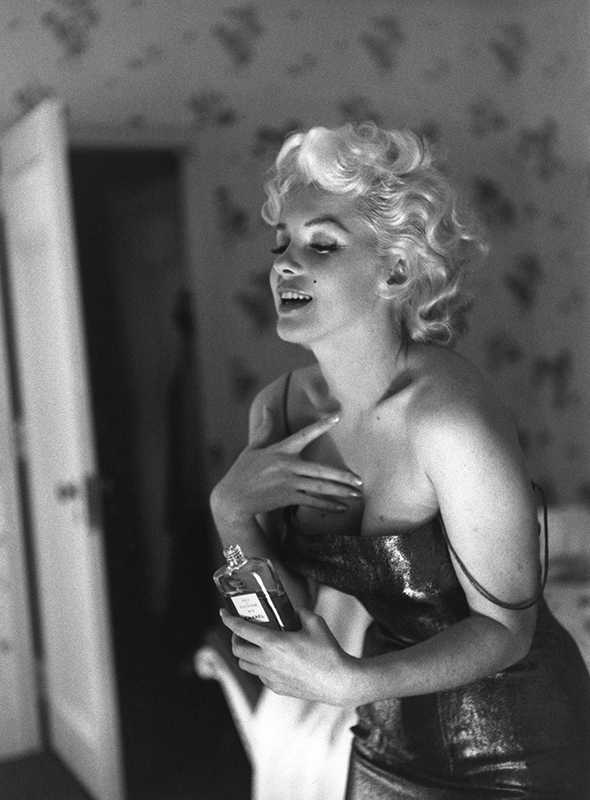
perfume used to be chosen like a surname. You found the one, wore it until the bottle became part of the furniture and left it behind in lifts, coats and other people’s memories. It was less an accessory than a calling card: invisible, intimate and recognisably yours.
Beauty has begun to find that arrangement a little limiting. The modern fragrance customer is encouraged to own something fresh for work, something warm for evenings, a skin scent for intimacy, a gourmand for comfort and a holiday perfume that should apparently never be worn in ordinary weather. Then come the oils, mists, lotions and incense intended to sit beneath or around them. The signature scent has not simply been replaced by another bottle. It has been replaced by a wardrobe.
The shift is real enough to measure. In its global 2026 trend report, Pinterest recorded searches for “niche perfume collection” rising 500 per cent, “perfume layering combinations” 125 per cent and “scent layering” 75 per cent year on year. Intriguingly, searches for “signature scent” also rose 45 per cent. The old idea is not literally dead. It is being demoted from lifelong commitment to one option among many.
When one bottle knew your name
The appeal of a signature was never only convenience. Smell has an unusually close relationship with emotion and autobiographical memory. Studies have shown that memories prompted by smells can be experienced differently from those triggered by words, images, or sounds. A familiar perfume can collapse years in a second: somebody’s scarf, a first flat, the person you were when you wore it every day.
Repetition gives fragrance time to collect those associations. One scent worn through ordinary mornings and significant nights becomes a continuous thread. Other people learn it too. “You smell like you” may be one of beauty’s most intimate compliments.
There was also pressure inside the romance. The search for a single perfect perfume assumes identity is stable, that the same composition should make sense in humidity and cold, at a wedding and on a train, at 20 and at 40. It can turn a bottle into a personality test: woody means serious, vanilla means sensual, rose means feminine, smoke means mysterious. Anyone who wants to move between those codes—especially beyond traditional gendered fragrance counters—may find a wardrobe more truthful than a signature.
Perhaps we have not become less interested in identity. We have become less convinced it must be singular.
Perfume is dressing for the life you have today
The wardrobe metaphor works because scent already behaves like clothing. Temperature changes how a fragrance wears. Context changes how much feels appropriate. Mood changes what we want near the body. The perfume that feels like a cashmere coat in January can become oppressive in August; an airy citrus that disappears at night can feel exactly right on a hot commute.
A rotation gives fragrance permission to be responsive. It can be private or declarative, masculine on Monday and floral on Friday, nostalgic one day and deliberately unfamiliar the next. Notes do not have a gender, even if decades of packaging taught shoppers to assign them one.
Social media has accelerated that freedom. PerfumeTok and fragrance communities translate an invisible product into stories, note lists, “vibes” and layering formulas. A person who cannot smell through a screen can still be persuaded by a description such as “cold hotel lobby”, “strawberry lip gloss in a leather handbag” or “clean laundry after midnight”. Perfume becomes content before it becomes scent—and every micro-aesthetic creates room for another recommendation.
Before the hashtag, scent moved through the whole room
Scent stacking is not a 2026 invention. Across many Arab—and particularly Gulf—fragrance traditions, scent has long travelled beyond a single spray on the wrist. Perfumed oils can be worn on the body; bakhoor smoke can scent hair, clothing and rooms; different fragrances can be applied in sequence. The result is not necessarily one branded composition, but an atmosphere that moves with the wearer and through the home.
The terms matter. Oud is the aromatic resinous wood known as agarwood, or the oil distilled from it. Bakhoor is incense: usually wood chips or powder perfumed with oils, resins, spices or florals, then burned in a mabkhara, an incense burner. Attar is an oil-based perfume, often blended from several aromatic materials. They can meet in a layered routine, but they are not interchangeable names for one vaguely “exotic” smell.
In Qatar, for example, the national tourism authority describes smouldering bakhoor being passed around a majlis so guests can scent their hair, hands and clothing—a gesture of welcome it compares with serving coffee and dates. The Smithsonian’s account of Arab perfume-making similarly places fragrance-sharing within family memory and social connection. Here, scent does not stop at individual self-expression. It helps prepare a body, a gathering and a space.
There is no single Arab perfume routine, and Gulf practices vary between countries, communities, families and occasions. That variety is precisely why the vague claim that layering is simply “Middle Eastern” says so little. What the global trend cycle presents as a clever new formula often belongs to a much larger world of hospitality, ceremony, grooming, memory and daily life.
What gets lost when ritual becomes a hack
Beauty culture is excellent at turning context into steps. Oil first, perfume second, hair mist last: suddenly a living practice is a three-product checkout. A tutorial may borrow the technique while dropping the names, places and relationships that gave it meaning. “Ancient inspiration” becomes decorative copy; the culture becomes moodboard material.
The problem is not that fragrance traditions travel. Perfume has always moved through trade, migration and exchange, and creative borrowing can produce genuinely beautiful things. The problem is presenting a practice as newly discovered once it becomes legible to Western trend media, or reducing diverse Arab and Gulf traditions to an aesthetic of gold bottles, oud and smoke.
A more generous version of the trend would name its influences, treat Gulf perfumers and wearers as sources of expertise rather than atmosphere, and remember that layering can be relational as well as individual. The 2026 Vogue guide to fragrance layering, for instance, acknowledges the practice’s Middle Eastern roots even as it surveys the modern lotions, oils, mists and perfumes now sold for the purpose. Attribution does not prevent anyone from experimenting. It simply makes the story more truthful.
Personalisation is excellent business
The fragrance wardrobe arrives at a fortunate moment for the industry. From January to September 2025, US prestige fragrance sales rose 6 per cent to $5.9 billion, according to Circana. Units of mini and travel-size fragrances grew 12 per cent, while mini and discovery sets rose 41 per cent. The format solves a real problem—few people want to blind-buy an expensive full bottle—but it also makes variety the product.
Sampling once led to a decision. Now sampling can be the destination. A discovery box offers ten possible selves at a reachable price; a travel spray lets a luxury name into the handbag; a subscription ensures the next identity arrives before the last atomiser is empty. This can widen access to perfume and reduce the cost of a bad full-size purchase. It can also normalise a collection of almost-finished vials whose principal purpose was to keep discovery moving.
Mintel’s 2025 fragrance analysis connects sampling growth to social-media micro-trends and economic pressure. It notes that consumers can rationalise the price of discovery sets even when they cost as much as a full bottle, while brands can use minis to encourage more frequent purchases. The low-commitment format is financially accessible one transaction at a time; the habit it creates may be anything but minimal.
The wardrobe metaphor does clever commercial work. Nobody expects to own one shirt, so why should anyone own one perfume? “Personalisation” gives abundance a flattering name. A collection stops looking like consumption and starts looking like self-knowledge.
Discovery can become accumulation
There is nothing inherently excessive about owning several fragrances. A small rotation used with pleasure may be more sensible than a single enormous bottle bought for a fantasy life. The trouble begins when exploration has no point at which it becomes knowledge.
Perfume is particularly good at disguising accumulation because the objects are beautiful and the doses are small. A 2ml vial barely counts as shopping; 40 of them still occupy a drawer. Miniatures and discovery sets also multiply caps, pumps, labels and boxes. Small does not automatically mean low-impact: tiny and mixed-material beauty packaging is commonly rejected by kerbside recycling systems.
Full bottles carry their own weight—literally. Luxury fragrance depends on heavy glass, decorative finishes and elaborate presentation. Refill systems can reduce packaging when they are designed and used effectively, but the most sustainable-looking option is not necessarily the one a person will use. A refillable bottle abandoned at one-third full has not completed the virtuous story printed on its box.
The useful question is not “How many perfumes are allowed?” It is “Does each format help me use fragrance, or merely help me acquire it?” A discovery set used from first vial to last can prevent an expensive mistake. A cabinet of untouched samples is simply a smaller-scale version of the same one.
Shop your shelf before you build a wardrobe
The most interesting thing about layering is that it can make what you already own feel new. Begin with a no-buy experiment. Gather the scented products already in your bathroom, handbag and bedroom: perfume, body lotion, oil, mist and, if it is part of your home practice, incense. Notice which notes repeat. The vanilla hiding in a lotion may soften a woody perfume; a citrus mist may lift something dense. Unscented moisturiser can give perfume a hydrated base without adding another competing fragrance.
Modern layering can span body lotion, mist, oil and eau de parfum, but begin with two layers, not seven. Choose one as the base and one as the accent, apply each lightly and give the combination time to settle. A blotter can help with the first edit, but skin will tell you how the pairing actually wears. Apply the products separately rather than mixing liquids inside a bottle, and check the product instructions before using fragrance on hair or delicate fabric.
Keep a short note on your phone: what you combined, the order, the number of sprays and whether you still liked it three hours later. Repeating a formula is how an accident becomes personal style. It also makes it obvious which products you truly use.
Incense changes a room, not just a pulse point. The US Environmental Protection Agency recommends proper ventilation when incense is burned indoors. Follow the burner’s safety instructions and consider children, animals, neighbours and anyone sensitive to smoke or strong fragrance. The same courtesy applies outside the home. Personal expression still occupies shared air.
If a combination works, resist the urge to buy an official “layering enhancer” immediately. Wear it again. Finish something. The point is not to complete a brand’s routine; it is to learn your own nose.
The signature has not vanished; it has multiplied
The signature scent promised coherence: one beautiful answer to the question of who you are. The fragrance wardrobe offers flexibility, play and a welcome escape from rigid identity. Both can be true pleasures. Both can also become sales scripts.
Perhaps the most interesting future is not one lifelong bottle or 50 competing miniatures, but a handful of scents worn long enough to mean something. Memory does not require monogamy. A summer can have its perfume; so can a city, a relationship or a version of yourself you needed for a while.
Beauty wants the wardrobe to remain permanently unfinished. You are allowed to close the door. The real signature was never the bottle anyway. It was the way you wore it often enough for somebody to remember.