How Old Hollywood’s biggest stars went from studio property to running the show
Film & TVFilm & TV12 November 2026
AuthorOphélie Dumusc
I
n the era of movies like Practical Magic 2, tv shows like Big Little Lies and The Morning Show to name only a few, women-focused stories are now stronger than ever. Or are they?
We tend to forget the journey behind on-screen stories that empower women and are here to empower a whole new generation. Back in the golden age of Hollywood, especially in the 30s and 40s, something known as "women’s pictures" emerged. Those movies were heavily influenced by women’s stories and their experiences. They were the centre of attention and everything revolved around them. Those characters were complex, clever, capable of incredible depth and far from perfect. They were real and not glamorised for the sake of it.
In fact, they were ahead of their time. They speak to audiences back then probably almost as much as they would speak to audiences this very day. And that says something. Ironically, behind the scenes was quite a different story. Actresses weren’t as free as the characters they portrayed. Hollywood, run by prominent men, big studio executives, was everything but liberating. Image was everything. Appearing a certain way, behaving as you were told as well as being seen in the right places with the right people were the primary and most important things about you.
Romantic relationships on screen were also very different from those in real life. On the screen, you could have a glimpse of what was called "a modern woman". Those were characters who, by choice, refused to settle down, openly went to one lover to another, and had no desire whatsoever to become housewives or mothers. They were common especially in the 1930s when a new era of movies called pre-code came into being some of the best examples of emancipated women.
Some of those movies include The Divorcee (1930) when a woman, learning she had been cheated on, decides to do the same so that both parties are equal. Baby Face (1933) when this time, after living a poor life and being exploited, a woman decided to take her life into her own hands and advance her social status using her body.
Behind the screen, again, it was a whole different story. Actresses, even those who portrayed more modern women, had to settle down. Their lives were printed daily on movie magazines and they had to appear to be living in a way that people wouldn't bat an eye at.
Usually, women of that time were married a few times. When you started going out and being seen with someone, it was considered you two were serious and so, the studios would want you to be married. Living together without being married was often not regarded as socially acceptable, particularly for public figures.
The studios would also most of the time, pay for the wedding and arrange for it to be some sort of publicity event. Art did not reflect life, and the freedom they portrayed was probably the most freedom many of them ever experienced. Women directors and screenwriters were there but didn’t get the recognition they deserved. You couldn’t have it all. You had to pick and stick to it.
In today’s day and age, actresses can turn into producers, directors, be in charge of their own company, choose the stories they want to tell and how they want to do it. Most importantly, they can be themselves off-screen, have the power to manage their own images instead of having others choose and dictate how they should do so. All those changes didn’t happen overnight. The industry into which women were moulded evolved, now they’re the ones who have ideas and work on them instead of being the ones being worked on.
Now their voices can be heard and their words matter. Image isn’t everything, it is what you made it to be. Women who had a career in acting back then had to fight only to be able to continue working and have the same great roles as they once had. Having to prove yourself even though you already had years of experience, hard work and recognition from the industry. It was never enough. They were never big enough.
"I am big, it's the pictures that got small." As Norma Desmond from Sunset Boulevard would say.
Some women paved the way for what we see nowadays, some of them even rejected the societal standards and norms that were established in their day. A number of them also challenged the studio system in their own ways.
Joan Crawford had a substantial career for years and refused to have lesser ambitions as she got older. She fought for good and interesting roles and made some of her most successful films during her 40s and 50s. She also went from MGM to Warner Bros in order to maintain interesting offers and work opportunities.
Bette Davis, also famous for her career that spanned decades, wanted to keep working as long as she could and made sure of it by a tenacity that is admired by many. Katharine Hepburn was one of the only women of that time who dared to do exactly what she pleased. She never cared for the glamour part of it and went on to work with trousers on. She also famously never married or had children, by her own choice. Carole Lombard and Barbara Stanwyck were some of the pioneers of not belonging to only one studio and making deals with the studio that would offer them the best roles. That was something that very few actresses dared to do because there was way less security than having a contract for years.
As for directors, Dorothy Arzner and Ida Lupino were some of the most successful directors at the time. Arzner was especially popular in the 1930s and worked with the most talented actresses of her time. Crawford and Hepburn were some of them. She was one of the very few to establish a successful and long career at that time, and was respected for it. Lupino came into the picture in the 1950s. She was also an actress and like Arzner, was one of the only prominent respected women directors of that era.
She co-wrote a lot of movies that she made, and all of them had some strong social messages to them. For instance, some of her strongest works were openly talking about rape (Outrage, 1950) or bigamy (The Bigamist, 1953).
Those were exceptions at the time and not the norm. Although those women existed and were talented, it wasn’t exactly an easy path.
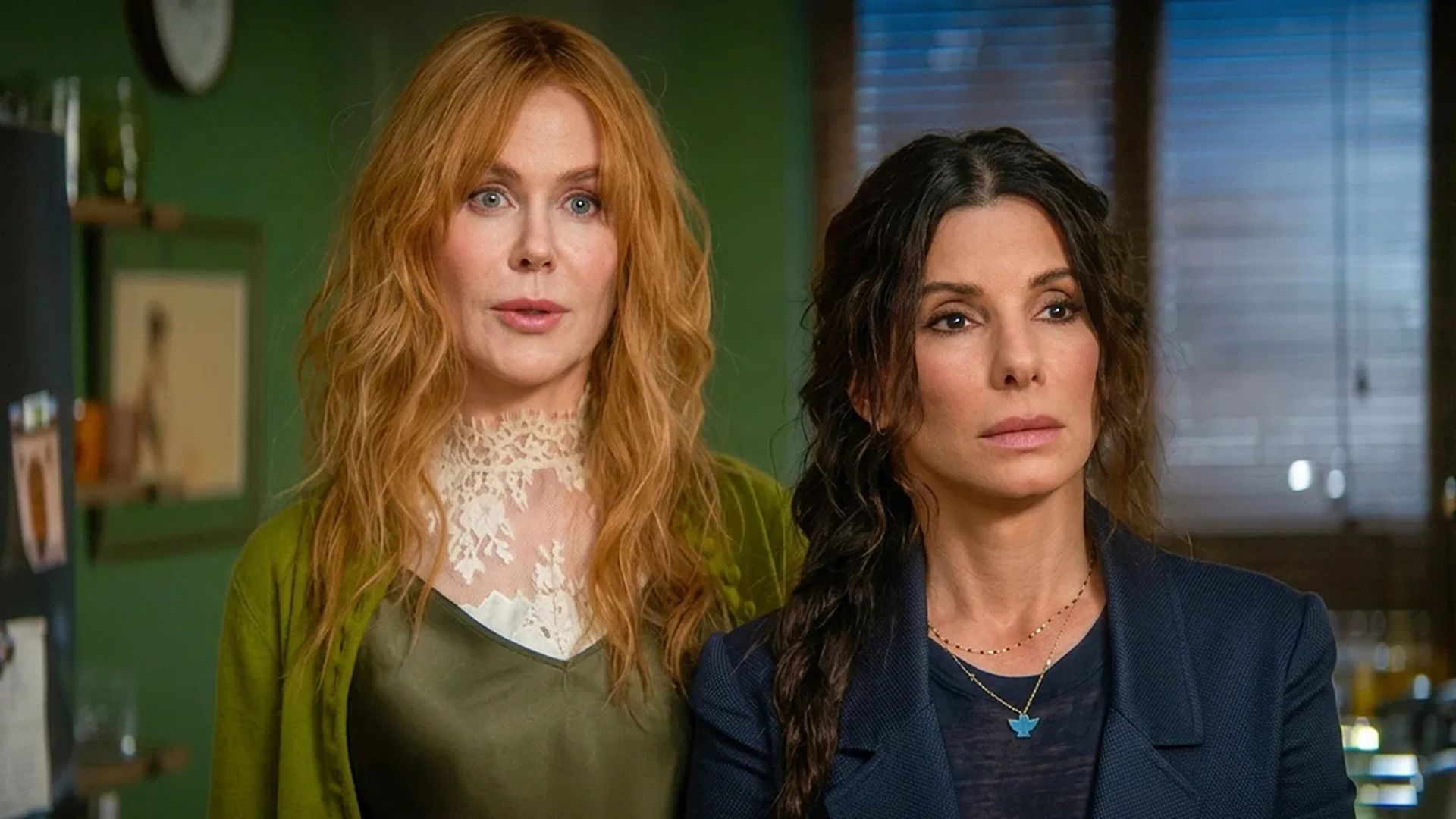
Coming back to today’s reality and Practical Magic 2, it is produced by the two lead actresses, Sandra Bullock and Nicole Kidman, and this is something we’re witnessing a lot nowadays. Artists having their own production company, selecting the projects they wish to make and building them from start to finish.
Another primary example would be Reese Witherspoon, who created Hello Sunshine to produce essentially women’s stories. Jennifer Aniston owns Echo Films, created in 2008. Both of them co-star in The Morning Show, and again, it is produced by both of them.
This is something that is rather common in this industry today, but it wasn’t for a very long time, and the women who tried or succeeded in being more than a pretty face on a screen are the blueprint for everything that led us to where we are now.
From being a commodity to manage to be the ones in charge, the ladies of the city of dreams have been through hell and back. However, freedom didn’t come all at once. It became possible through generations of women who started to push the boundaries of what was expected of them.
They all had their reasons; some fought for better roles, some for creative control, and some simply refused to fit into the image Hollywood had created for them. Every step they dared to take made the next one possible. They had to accept what wasn’t acceptable, being considered less than they were and had their decision taken from them. In all of this, they survived and their movies did too. Their legacy is more durable than any threat from a big executive ever was.
In today’s world, we would think we’re so far from this and this evolution is indeed powerful. But can we still do better? Can we imagine a day when having it all can come without any compromise? Can we think of a time where nothing could ever stop actresses from anything they want to accomplish?
After all…tomorrow is another day.