Serpil Çalışkan on Mixed-Media Art and Children's Storytelling
Culture18 September 2026
AuthorTya Mireya
PhotosPhoto: Serpil Çalışkan
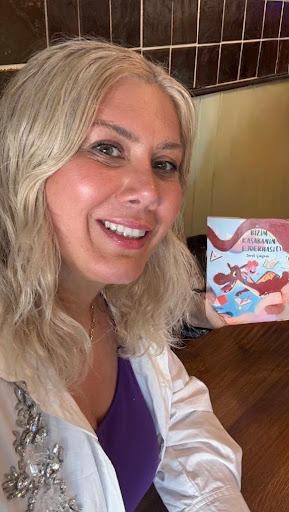
Artist and children's author Serpil Çalışkan discusses mixed-media art, Turkish heritage, conservation and the memories that shape her storytelling.
T
Conducting my first author and artist interview with Serpil gave me the chance to understand the significance of conserving materials to give them a second life, while reminding me to continue my own creative path without seeking others’ validation.
hese past few weeks, I’ve been collaborating with Serpil Çalışkan, a Hertfordshire-based artist and author, on an interview. Last month, she reached out to me regarding Cherub Magazine, which is where our interaction began. Learning about her background in writing, art, and conservation was truly fascinating as someone who loves art in all forms.
When I came across Serpil’s social page, I was immediately greeted by her passion for conservation. She released an article called Material, Memory, and Recycled Art — where she showcased The Memory (2026), a piece crafted from recycled aluminum wire, silk knots, and authentic Valais Blacknose sheep wool. This article discusses the 110-year history of recycled art, which uses waste to critique consumerism and convey profound messages.
You've built a career as both a children's author and a mixed-media artist. What drew you to pursue both paths simultaneously, and how do they complement each other?
I'm a Harpenden-based artist and author, and I've always seen storytelling and object-making as two sides of the same instinct, to give meaning to material and memory. As a mixed-media artist, I work with reclaimed copper, brass, silver wire, and wool to give old materials new purpose. As a children's author, I do something similar with ideas and cultural memory, giving old stories new life for young readers. The two feed each other: the tactile, patient process of conservation and art-making shapes how I build a story's world, and writing for children keeps my art playful and open to wonder.
How did your background in metal conservation and project management lead you to children's storytelling and visual art?
As a conservator, I was trained to notice small details, and how a small touch can create a large effect. Archaeological restoration demands knowing a material's whole history: objects surface at their most fragile, and conservation and research move forward together. My project management training added something just as valuable, the discipline of time management, which makes it possible to actually finish a book or a piece of art rather than letting it stay half-formed.
Your book Bizim Kasabanın Ejderhası (Our Town's Dragon) draws on Turkish traditions and folklore. How did your upbringing or cultural heritage influence the themes and narratives in your writing and art?
Growing up in Turkey, I was surrounded by the idea that ordinary, overlooked details are our roots, not things to leave behind. My work in restoration only confirmed this: the clothing, jewelry, oil lamps, even the first clay tablets we see in museums aren't discarded scraps, they're evidence of who made them, why, and what they meant to someone once. If we'd treated them as waste, we'd lose everything, because our sense of who we are is shaped by the experience of those who came before us. Bizim Kasabanın Ejderhası grew from that same instinct, following the past but grounded in the reality of the present, where every detail around us still matters. Knowledge, like the books in the story, is never meant to belong to just one person, it has to be shared universally, so it falls to a small group of friends to find the lost parchments and protect them for everyone.
How does your experience as a mixed-media artist influence your approach to writing for children?
Because I physically work with materials like wool, silk, bamboo, and metal wire, I know their texture, weight, and feel firsthand, not just how they look. This makes the storytelling in my books stronger: when an object or material appears in a story, I can describe it in real, sensory detail, the coolness of metal, the roughness of raw wool, the way silk moves, because I've actually touched and worked with it myself. That hands-on experience is what lets me bring a physical, believable texture to the worlds I write for children, rather than describing materials only from imagination.
You've won the BADA award for your art. How did this recognition impact your creative confidence/direction?
The BADA (British Antique Dealers’ Association) Harold Davis Prize came to me in 2018, during my fine metalwork course. Receiving such a prestigious prize helped me trust myself and my work much more.
Is there a piece of your art or writing that feels deeply personal? What does it represent to you?
The place names in my book come from my father's village, the streams, mountains, and hills I knew as a child. It was remote: we'd travel through the night by bus each summer to reach it. There was no electricity, no shop, just an endless sky, the low hum of animals, spring water bubbling up, mud toys, and imagination. Children who weren't afraid of boredom invented whole worlds from the strange names of those hills.
How's your experience with bringing a published book in Turkey to an international audience?
Bizim Kasabanın Ejderhası is currently published in Turkey by İthaki Çocuk Yayınları, and that's where the journey stands today. But my hope reaches much further, I dream of children in different parts of the world reading it too.
Stories like this travel well because childhood curiosity is the same everywhere, whether the landscape is a village in Turkey or somewhere else entirely. Taking the book beyond Turkey is a goal I'm actively working toward , it's one of the things I'm most excited about for this story's future.
As an FRSA (Fellow of the Royal Society of Arts), you're part of a community that values innovation and societal impact. How has your involvement with the RSA shaped your creative projects and approach to art?
Being an FRSA, and writing articles as a member, is something I'm genuinely proud of. It connects my practice to a wider conversation about art's role in society, and it's brought real, professional benefit to both sides of my work, art and books alike.
Art and writing both come from an urge inside you that simply can't be stopped, so when you want to write, write, whatever it is you want to say. Start from small details: describe what you see the way you'd explain it to someone who isn't standing beside you, and the writing will follow. As an artist, I'd add this, art isn't just the effort to make something beautiful; it's energy born from the fusion of feeling and story. So make art in your own style. I love the world, and my style is working with sustainable materials, wherever I feel free to create. Add your own interpretation, and please don't wait for anyone else's approval or admiration before you start making your own art.
Currently, Serpil Çalışkan is developing a picture book series called Tiko and the (Plushie) Dino, and is in the process of submitting this idea to literary agents in the UK.
For further updates, follow her Instagram at @serpilcaliskanart and LinkedIn at Serpil Caliskan. You can view Serpil’s projects here.