‘The Love Hypothesis’: An Experiment in Demisexuality
Culture5 October 2026
AuthorGrace Henson
When Ali Hazelwood published her debut novel, ‘The Love Hypothesis’, in 2021, it became an instant hit. With the novel popular on BookTok, spending 40 weeks on ...
W
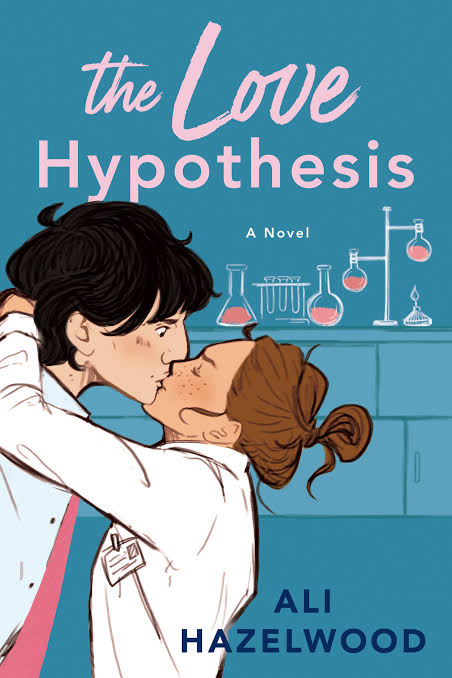
hen Ali Hazelwood published her debut novel, ‘The Love Hypothesis’, in 2021, it became an instant hit. With the novel popular on BookTok, spending 40 weeks on the New York Times’ bestseller list and selling over 750,000 copies in its first year, Hazelwood certainly knows what she’s doing when it comes to writing romance. To think, the story had humble beginnings as a Star Wars fanfiction, as part of the Reylo ship (that’s Kylo Ren and Rey, for those less fanfictionally inclined). Of course, it’s not surprising in this day and age for a piece of literature to have its origins in a different fandom - see works like Fifty Shades of Grey, which stemmed from Twilight fanfiction - but what is surprising, at least when I first read TLH, was the easy and casual way Hazelwood expresses her protagonist’s sexual identity.
The plot of TLH revolves around Olive Smith, a PhD candidate who enlists the help of the grumpy Dr Adam Carlsen in deceiving her best friend, Anh, into thinking they’re in a relationship. The heart of the plan is girls supporting girls. Anh has a crush on Olive’s ex and to show Anh she is over him, Olive kisses the first person she sees: Adam Carlsen. Convoluted? Absolutely, but it unbelievably works, and Anh begins dating Jeremy, the aforementioned ex.
Chapter 1 opens with said kiss, and it is done clinically on Olive’s part: a means to an end. While she does end up enjoying it as a concept - it is a “good kiss” - it is not done with a romantic or sexual motivation. It ends up being the catalyst to starting their fake dating ruse, and to support Olive’s lack of sexual inclination, she adds a rule that there is to be “no sex”.
According to Merriam-Webster, the term ‘demisexual’ means:
“feeling sexual attraction towards another person only after establishing an emotional bond with that person”.
And while not explicitly stated, Olive fits this definition to a tee. After proposing the rules, she wonders if she should explain to Adam:
“That for years she’d wondered whether she was asexual and she had realized only recently that she might be able to experience sexual attraction, but only with people she trusted deeply?”
Even using the term ‘asexual’ is groundbreaking, due to the lack of representation across media that the ace spectrum experiences. Having a protagonist actually think about her sexuality and the fluidity it can inhabit is revolutionary. The film adaptation of TLH from Amazon Prime goes a step further, and labels her demisexuality. Talking to her friend Malcolm early on in the film, he says, “It’s rough out there for you demisexuals.” Olive is confused, and Malcolm explains the definition, to which she is shocked that not everyone conforms to its description. Ali Hazelwood worked as a producer on the film, so I think it’s fair to say that Olive Smith is canonically demisexual!
In a world of heteronormative, sexually driven romance novels and films, it is refreshing to see a protagonist veer off from these expectations. While I’m not denying the progression of Adam and Olive’s relationship (and the things they get up to), it only does so when the emotional bond is cemented, allowing Olive to experience the sexual attraction that comes from trust and connection. And it is nice to hear her explain this to him later on:
“It’s not that I want to not have sex. I just . . . don’t particularly want to have it… I don’t feel any sexual attraction unless I actually get to trust and like a person… but now—I really like you, and I really trust you”.
Actually reading this is so important for the ace community and helps explain different kinds of attraction. There are many readers who felt a connection with Olive’s words, and naturally, there is a Reddit thread to prove it. Hazelwood didn’t stop there; in her 2023 release ‘Love, Theoretically’, protagonist Elsie plays the part of Greg’s fake girlfriend, because he is scared to come out to his family as asexual. By showing characters that have fulfilling relationships that don't dampen their own identities in the process, Hazelwood is helping destigmatise a ridiculously underrepresented group. And the high sales numbers for her work prove that people like to read about these experiences!
Ultimately, TLH is funny, romantic, clever, and easy to read. But it does much more than that in how it serves the ace community. A demisexual person can be the lead of a hit romance novel in the same way anyone else can, and displaying a healthy romantic and sexual relationship for them is exactly what we need to see.


