Why We’re Dressing Like Keith Flint Again
Fashion6 October 2026
AuthorValeria Franco
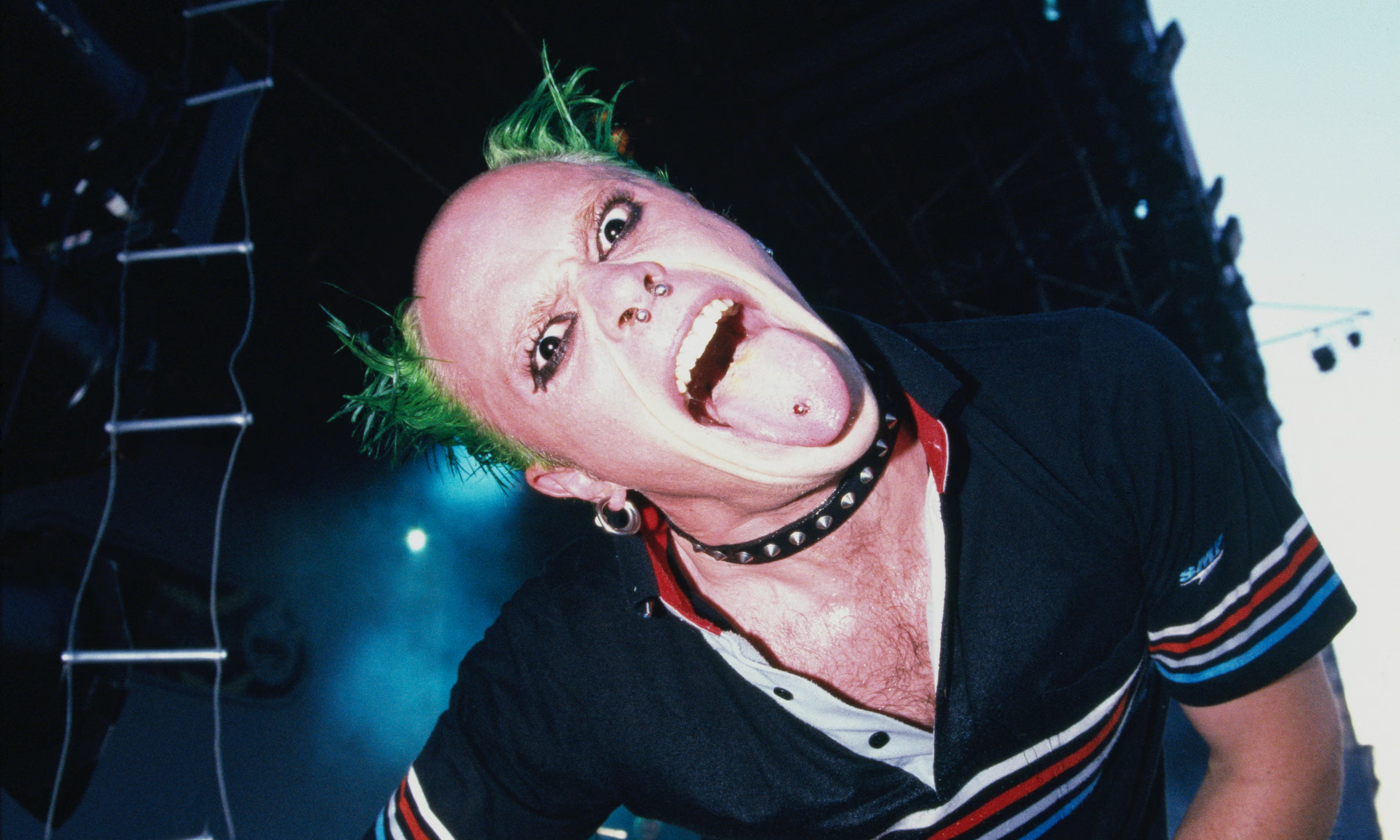
PhotosPhotograph: Mick Hutson/Getty Images
Keith Flint made punk attitude and rave culture unmistakably his own. In 2026, fashion’s return to imperfection feels like it’s catching up with him.
L
ong before we turned against the “clean girl” aesthetic and began expressing our identities through personal style, Keith Flint of The Prodigy was doing it first. His style fused rave, punk and electronic influences. In an era increasingly defined by minimalism, he built an unmistakable aesthetic of his own and seemed determined to defy every fashion norm around him.
He wasn't chasing a “perfect” look. He was interested in self-expression, full stop. Torn clothing, piercings, heavy eyeliner and a spiked, two-tone mohawk became as much a part of his identity as his voice. It was the collision of punk attitude and rave culture, and it made him instantly, permanently recognisable.
Today, that same instinct is everywhere again. Piercings, tattoos, upcycled clothing and deliberately distressed pieces are becoming ways of communicating identity rather than simply following a trend. Looking polished is no longer necessarily the goal. Looking like yourself is.
We can see that shift in the rise of the “messy girl” aesthetic, embraced by artists such as Charli XCX, Billie Eilish, Adéla and Slayyyter. Deliberately undone hair, heavy makeup, unconventional styling and a refusal to look overly polished have become part of a broader rejection of perfection.
Charli XCX's Brat era, in particular, turned club culture and deliberately unpolished self-expression into a mainstream visual language. Meanwhile, artists such as Adéla and Slayyyter continue to experiment with chaotic, hyper-feminine and deliberately imperfect aesthetics.
The aesthetics may have changed, but the attitude hasn't.
Flint understood that decades ago. The clothes, hair, makeup and body modifications were part of the performance. Rave wasn't just something he participated in. It became a visual language, fused with punk's rejection of convention and turned into something unmistakably his own.
His image also proved that a musician's appearance could become inseparable from their cultural identity. Flint wasn't simply the person standing at the front of The Prodigy. He was part of the band's visual mythology. His appearance communicated the same energy as the music: confrontational, chaotic and impossible to ignore.
That may be why his image still feels strangely futuristic.
The Prodigy remains active in 2026, keeping Flint's influence connected to the present rather than confined to a nostalgic version of the 1990s. His legacy can still be seen in the relationship between music, fashion and identity, particularly as a new generation revisits rave, punk, Y2K and other subcultural aesthetics through its own lens.
And fashion has noticed this return to imperfection, too. Some collections have increasingly embraced distressed textures, layered styling, worn-in pieces and references to underground subcultures. The appeal isn't necessarily about recreating the 1990s. It's about recovering the freedom to look slightly strange, slightly chaotic and completely individual.
That was always part of Flint's appeal.
He didn't dress to fit neatly into an aesthetic category. He created an aesthetic around himself.
In 1996, Keith Flint looked like he'd arrived from the future. Thirty years later, he still does.
We're dressing like Keith Flint because fashion is finally catching up with him.