The Compound Asks Why We Love Watching Beautiful People Suffer
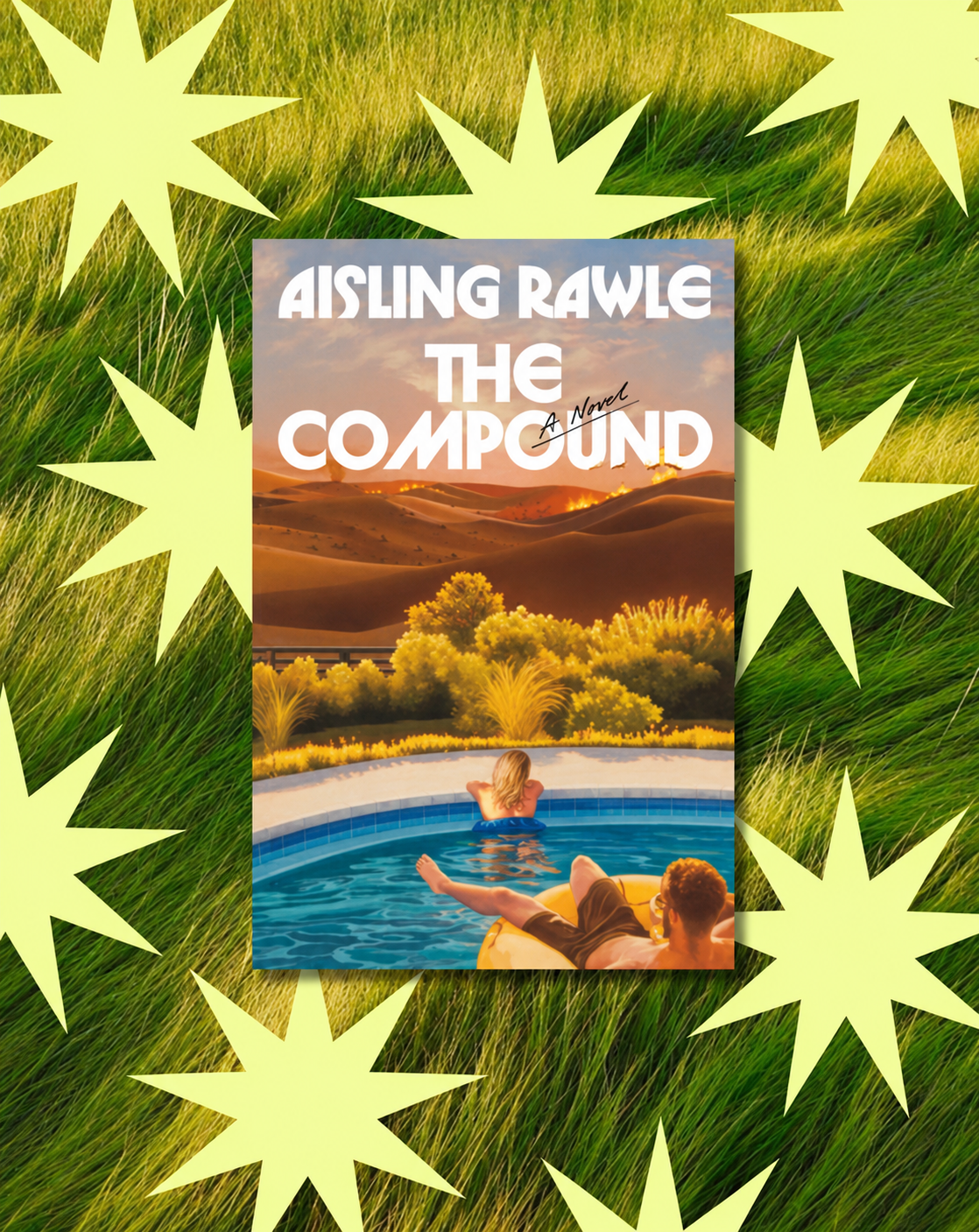
Aisling Rawle's The Compound turns the addictive mechanics of reality television into a dark examination of beauty, consumption, surveillance and our appetite for watching people suffer.
B
efore the suncream is taken from the shelves and replaced with pumpkins and wrapping paper for the remainder of the year, I urge you to squeeze in one final sticky, sweaty summer read — and I could not recommend anything more perfect for that than The Compound by Aisling Rawle.
I first spotted this novel in a small bookshop at the height of summer and was immediately drawn in by the quote across the cover: ““Lord of the Flies meets Love Island.” Love Island had just finished its thirteenth season and I was, naturally, in need of something to fill the reality-TV shaped hole it had left behind. I expected Rawle’s novel to be a standard piece of fanfiction disguised as commercial fiction, putting the reader into the bikini and Mallorca villa themselves, but it turned out to be something much darker and something that I found myself incapable of putting down.
The Compound follows Lily, tired of wasting her beauty on the mundanity of real life, as she wakes up in a remote desert compound alongside ten other beautiful girls. The place is messy, with little in the way of amenities, limited food, and barbed wire surrounding its perimeter; an offering left by the previous contestants. Beyond the barbed wire, there is scorching sand for miles, and the male contestants are growing nearer. Cameras capture every angle and broadcast it around the world for viewers to tune into daily.
A large screen details a task the contestants can complete in exchange for shared necessities. Only by completing the task, or waiting until the next day, can they move on to a different prize. The contestants soon realise that the more efficiently they complete the task, the better the reward. Want a door? Complete the task half-heartedly and you might receive a plank or two, but put in the maximum effort and you get an endless supply.
Soon, they discover that they also have personal tasks, ones that reward them with luxuries ranging from hairbrushes and moisturisers to designer bags and perfumes — but don’t forget to thank the brand on camera!
It is this part of the novel that makes The Compound so much more interesting than its Love Island comparison initially suggests. Rawle takes the familiar mechanics of reality television and coupling up for survival and strips away everything that makes them easy to consume. At first, there is no pool, no endless supply of branded Poppi drinks, no luxury bedrooms, and no perfectly stocked fridge. Instead, there is hunger, heat, surveillance, and the knowledge that everything you want has to be earned. It begs to question whether we want to see people falling in love and making genuine connections on these shows, both as a fictional and real society, or if we simply want to watch beautiful people reach their lowest point, suffering in exchange for a viral moment.
The contestants in The Compound are being watched at all times, but they are also being asked to perform at all times. They have to compete for food and shelter, but they also have to look good doing it. As ridiculously meta as that sounds when written down, this is what made the novel feel most familiar to me.
Reality television has always been about watching people perform versions of themselves, but the rise of social media has made that performance increasingly difficult to separate from everyday life. Influencers are rewarded for making their lives look desirable, while brands are rewarded for making us believe that we might be able to buy our way into the same one. In The Compound, Rawle takes that relationship between consumption and performance and makes it impossible to ignore. A nail file is no longer just a nail file when you have been without one for days. An expensive necklace you could never have afforded previously becomes more than a necklace when it is one of the few luxuries available to you. Even the most mundane items become aspirational when they are withheld.
What I loved the most about The Compound was its underlying criticism of the idea that, within social media culture, an abusive man is often more redeemable than a slightly boring woman. The male contestants often lash out violently, refuse to help, or speak distastefully, and yet it is clear from the start that the protagonist, Lily is the one receiving the ‘villain edit’. The audience repeatedly belittles her, makes her complete challenges she will struggle with, and attempts to vote her out, while the men go completely unscathed. It spoke to the strange culture of rooting for abusive men solely because they are attractive - something The Compound takes to its logical extreme.
We like them because they’re hot, we forgive them because they’re charismatic, we call their behaviour complicated, passionate, or misunderstood; we call her a bitch.
I picked this novel up because I wanted something that would give me the same addictive feeling as watching a group of beautiful people make increasingly questionable decisions in front of a camera. I did not expect it to make me think about why that is so entertaining in the first place. Go into The Compound expecting a dark, addictive reality-TV nightmare and you will certainly get one. Just don't expect to come away from it feeling quite so comfortable about why you enjoyed it.


