Express Yourself, Don't Repress Yourself: Why Gen Z still struggles with self-expression
Culture26 August 2026
AuthorIsabella Pettitt
PhotosWarner Bros. Records / Sire Records.
Have we mistaken freedom of expression for freedom itself? Gen Z self-expression looks limitless on paper, yet many of us still edit ourselves daily
O
n paper, young people today have more freedom than any generation before us. We can dress however we like, love whoever we like, chase unconventional careers, challenge traditions and even talk openly about topics that were once considered as taboo. Yet many of us still edit ourselves daily — sometimes because of legal or social reasons that forbid it, but more often for smaller things like family expectations, social norms, gender roles, or just the desire to belong.
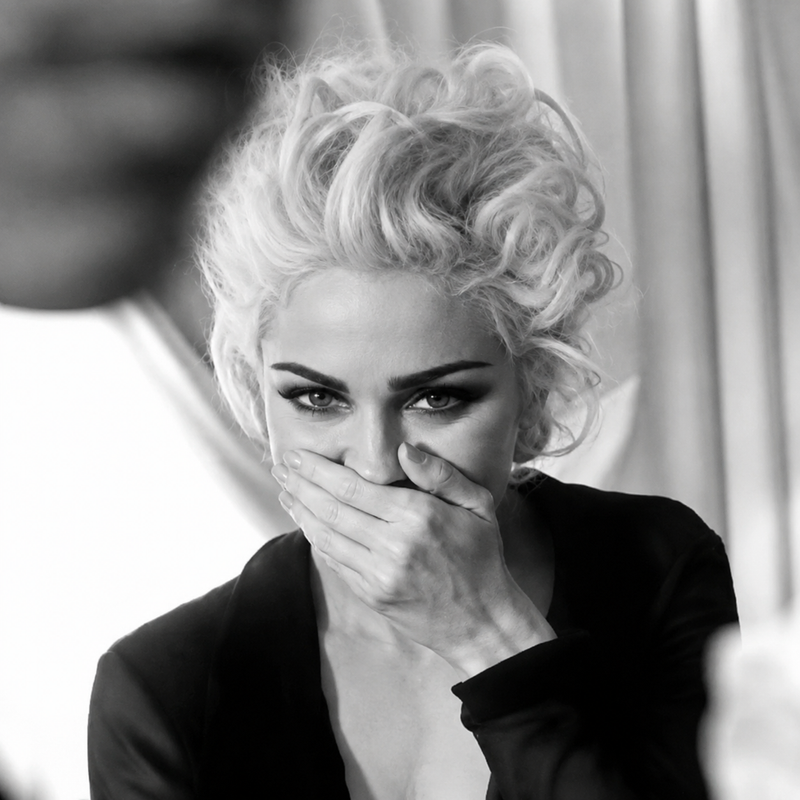
Express yourself, don't repress yourself has been a slogan for decades but Madonna made it a hit in the 90s, and the song's gone viral again over the last couple of weeks, dragging the question back up with it. Why, when so few of us are legally or socially forbidden from being who we are, do so many of us still hold back? Why do we suppress that feeling.
I put the question to a handful of the Gen z community, a mix of straight and queer, guys and a girls, and the same pattern showed up again and again. Almost everyone told me some version of I don't care what people think. And almost everyone, a few sentences later, described exactly how much they do.
Why do we hide our true selves?
One girl I spoke to put it best without meaning to: she said she's not someone who worries about being judged, then immediately admitted there have been "many times, even recently," where she's changed how she acts to fit in with people she didn't even like, just so they wouldn't exclude her.
Not everyone agreed there was anything to admit. One guy told me straight up: "Definitely not, a part of growing up is going through phases... does that mean I should be ashamed about the fact that I was a child watching a children's tv show? No, not at all." He'd bought himself a SpongeBob shopping bag a few months ago. Compare that to almost everyone else I spoke to, who had some version of pink hair and Shein haul confession, the childhood YouTube channel they can't rewatch without cringing. He was the outlier, and I think that's the point. Not being embarrassed of who you used to be might be a bigger flex than never having anything embarrassing to hide in the first place.
But the answer that stuck with me most came from a queer guy from a small town in Yorkshire. "I'm open about my sexual identity in most aspects of my life but what people find surprising about me is that I'm still not out to my family," he said, "and everybody who I tell that too is like, 'How?! You're so gay.'" Growing up surrounded by more conservative people, he told me, he didn't feel comfortable expressing himself, he'd go quieter, use a different voice, dress more boring. He's since moved to a city, he's out, he's sexually active, and by his own account he doesn't give "two fucks" what people back home think of him anymore. And yet in the same interview he admitted he still opts for the more heteronormative outfit sometimes, still nods along to guys in the club "even when it fills me with rage," just to stay part of the conversation. He said he gets jealous watching people online who seem to reject the norms completely, who "give no fucks."
That's the gap the slogan doesn't account for. Having the freedom to be yourself and it actually feeling safe to are two completely different things, and most people I spoke to are living somewhere in the middle of that gap, most of the time.
So where's the pressure actually coming from now, if it's not the law and it's not always even bigotry? For one guy I spoke to, it was as small as which friends he brought certain interests up with, he said his male friends bond with him over sci-fi but his female friends "9/10 have no interest," so he picks his conversations depending on who he's with. For the girl, it was staying quiet and reserved around people she wasn't close to, in case she came across as rude just for being herself. For the guy from Yorkshire, it's staying in the closet to family who he isn't even convinced would reject him, just because he doesn't know for certain that they wouldn't. People are just working out what it might cost them and deciding, most of the time, it's easier not to find out.
Are we more honest online than in real life?
Then there's the online part of it, because we are all more free with ourselves on a screen than we are in a room. We'll say things online, wear things online, post entire versions of ourselves online that we would never do in real life. Online, whoever's watching doesn't really matter to us. Offline, it's your family, your course mates, someone whose opinion you actually feel matters, an opinion that is valuable to you. That's maybe the real 'freaked out online but a prude in real life' thing, we've built a place where being fully yourself costs nothing, and kept the real world exactly the way it always was.
Maybe that's the actual answer to why do we suppress that feeling. It was never that the freedom wasn't there, it's that authenticity isn't something you either are or you aren't, it's something people give out in amounts depending on how safe the room actually feels. And for a lot of people, even now, even with all this supposed freedom, most rooms still don't feel safe enough to give it your all.