Beyond the canvas: Reflecting on David Hockney’s timelessness in Exhibition on Screen
Film & TV12 August 2026
AuthorAlexandra Hill
This radiant documentary shows how David Hockney pushed the artistic boundaries of British painting with vibrant expression and playful curiosity.
F
rom iconic British pop artist in the 1960s to abstract landscape painting and bold portraiture in later life, David Hockney’s 60-year career can only be described as experimental, curious, and revolutionary. Now, following his passing in June, two of his most landmark exhibitions are being reshown for British viewers through a medium Hockney widely celebrated: cinema.
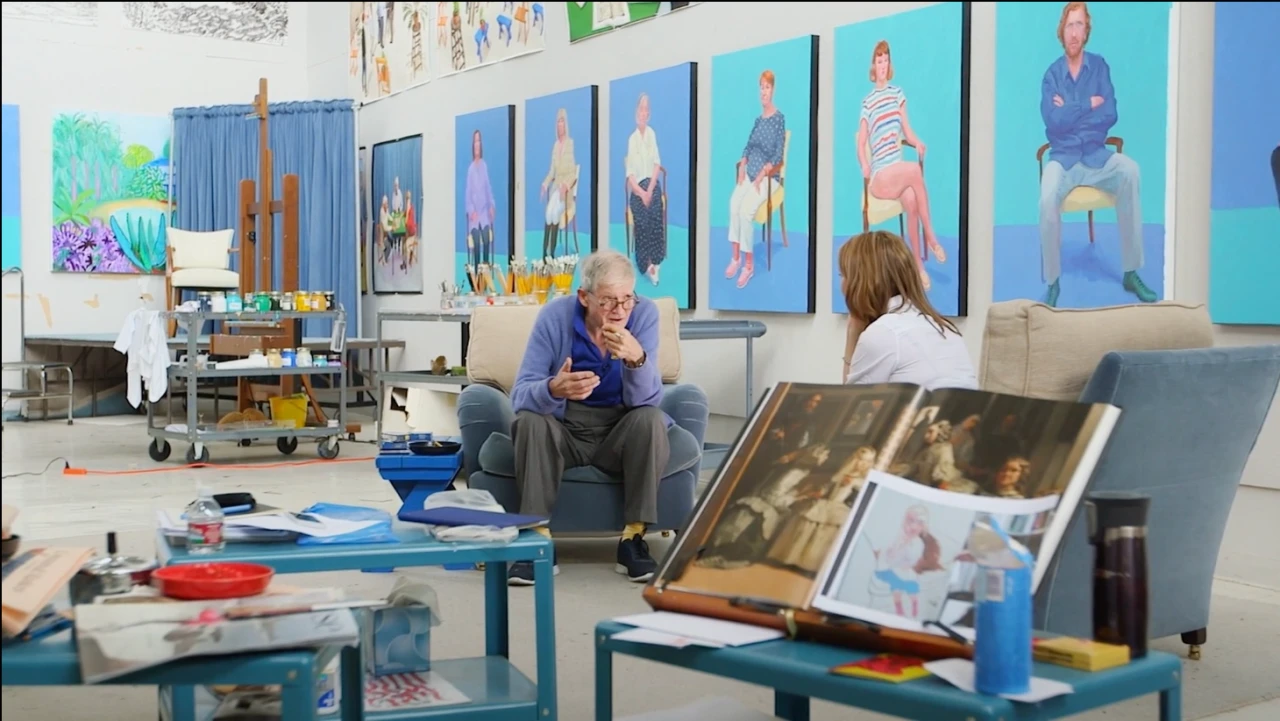
Originally released in 2017, the documentary Exhibition on Screen: David Hockney at the Royal Academy of Arts has been brought back to the big screen, showcasing Hockney’s sublime vivid colour and playful expression across his 2012 landscape exhibition “A Bigger Picture” and 2015 portraiture show “82 Portraits and 1 Still Life”.
Changing landscapes, familiar scenes
Staged in interview, Hockney speaks in snippets about his pieces while the documentary forms a video collage around him, reflecting Hockney’s multi-frame landscapes awash with bright colours and bold mark-marking reminiscent of impressionism, pointillism, and a splash of Van Gogh. Through marks, Hockney reveals, the landscape’s language can take shape.
Throughout the artist’s career, Hockney chose to live transnationally between Los Angeles and the UK, where in later life he became enraptured by the sweeping landscapes of Yorkshire hills and woodland scenes. This desire to travel and explore the wider world is captured in the wandering, dizzying paths of his scenes, emulating his playful journey into something fresh and new, while maintaining a sense of familiarity and home.
Landscape to landscape, threads of time, change, and memory emerge. Hockney was fascinated in capturing the same scene in different seasons—both in paint and through video—with scenes often beginning in winter to understand the depth of seasonal change throughout the year. There is a fascinating contrast between the classical inspiration Hockney draws from Rembrandt’s 17th century landscapes, while also experimenting with contemporary digital techniques using an iPad.
Building a picture beyond the canvas
In less than four years, Hockney then jumps from the great expanse of Yorkshire landscapes to intimate portraiture in his LA studio. Cooling from vivid greens to bold blues, each of Hockney’s 82 portraits (not to forget the one still life) were painted over 3 days—a strict deadline that the artist never crossed while capturing the transient individuals drifting in and out of his studio.
With age, Hockney’s inspiration for portraiture came fruitfully from the pleasure of one-to-one company and building a connection with the subject. But it wasn’t until the paintings were displayed together could both the physical and artistic difference between each one be noted, building a greater picture of change and individuality beyond the canvas.
Expressions had to be neutral; one you don’t usually see yourself. Rather than reflecting the earthy realism of Lucien Freud portraiture, Hockney leant into Matisse’s use of expressive colour to capture emotion in acrylic, whereby perfecting each likeness, or looking perfect for the artist, became unimportant.
Reflecting on the rise of the digital age—in which individual personas have gained unprecedented power—Hockney’s portraiture was insistent in establishing a chord of communication between observer and subject. From his seminal Portrait of an Artist (Pool with Two Figures) in LA to experimental photocollage landscapes of his homeland, Exhibition on Screen paints David Hockney’s six-decade career as unwaveringly timeless.
“I could go on forever.”