52 Blue and Ancestral Hauntings Open the London Indian Film Festival 2026 with Courage and Connection
Film & TV6 July 2026
AuthorAlexandra Hill
The London Indian Film Festival 2026 returns with a programme celebrating independent South Asian cinema. From Ali El Arabi's 52 Blue to the Ancestral Hauntings short film programme, here are the festival screenings not to miss.
T
his year's BFI London Indian Film Festival celebrates independent voices exploring how Indian cultures continue to evolve across different geographies and generations. Among the diverse programme at Europe’s largest South Asian film festival, a couple of not-to-miss screenings are 52 Blue (2025) and the “Ancestral Hauntings” short film series. Reviewed below, these works craft the festival’s themes of self-discovery, courage, and connection that persevere even far away from home.
52 Blue (2025), dir. by Ali El Arabi
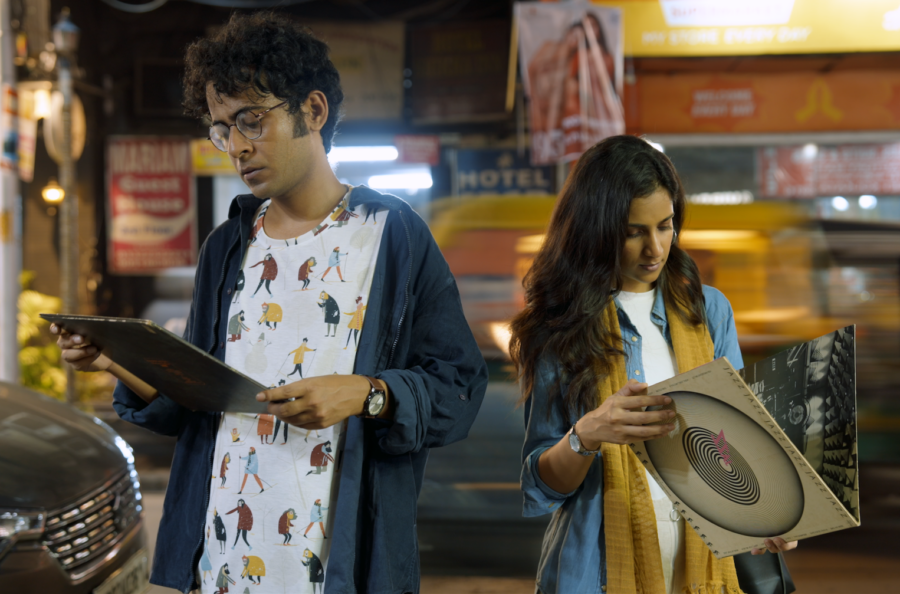
Set to open the festival’s 17th year at BFI Southbank on 9th July, 52 Blue is a poignant coming-of-age journey to self-discovery against all odds. Egyptian filmmaker Ali El Arabi lays out the journey of Ashish (Yadav Shasidhar), a young man who ventures from his rural home in Kerala to see his childhood idol Lionel Messi at the FIFA World Cup in Qatar.
Ashish endures a sheltered upbringing under his overprotective father (Adil Hussain), which we learn later is due to the loss of his older brother in a car accident during boyhood. Despite the tragedy, Ashish’s quietly supportive mother (Neha Dhupia) encourages her son to fledge the nest rather than to lose his own life to social isolation.
Haunted by the calls of a trapped whale near his coastal home, Ashish decides to venture into the wider world alone. In fact, the film takes its name from the “52 Blue” (52-hertz) whale, a mysterious unsighted whale whose unusually high 52 Hz call means other marine life cannot hear or answer back. Like the whale, Ashish must find the self-determination to overcome loneliness and create the connection denied to him.
As people worldwide sit down together to watch the 2026 World Cup this summer, Arabi shows how football creates this sense of unity, regardless of culture, since the sport is an experience to be shared. Ashish draws inspiration from the memory of him playing football with his late brother, while also finding closeness to his father by sharing the Messi matches on TV together.
But while many consider football to be a male homosocial sport, Arabi also takes the time to unpick gendered stereotypes. Ashish feels a strong connection to his father through dance, specifically Bharatanatyam, a famous dance form from Tamil Nadu that is meant to create joy though the connection between dancer and spectator. It is also Bharatanatyam that later leads Ashish to a romantic relationship with Arya (Arya Appukkuttan), who remarks on the “feminine moves” of the dance form. As Ashish replies, can you tell if a painting was made by a man or a woman?
At the same time, 52 Blue reminds us that the road to connection is also about who we leave behind. The glittering cityscapes and big-screen celebrations that Ashish enjoys in Qatar couldn’t have been reached without moving on from his homeland and ancestral rooting. And Arabi doesn’t ignore the danger of going it alone: Ashish is roped into a fraudulent deal, robbed at knifepoint, and cheated by those closest to him. But in spite of this, Ashish doesn’t lose sight of what is important to him, namely his family, but also an enduring optimism and lust for life.
Ashish’s story is certainly one of perseverance, albeit one of luck. He still makes it to Qatar with no money (and no shoes) which is a little in-credible, but his luck really comes to his rescue when he is allowed to keep his hard-fought position on the FIFA dance team despite already having missed half of the rehearsals. Shasidhar's bright-eyed performance ensures the emotional payoff still lands
Similarly exploring the dream of football stardom from unlikely beginnings, Arabi’s previous documentary Captains of Zaatari (2021) is another worthwhile watch. Both director and cast of 52 Blue will be present at this year’s LIFF.
Sugarcane, Burning (2025), dir. by Tashin Singh
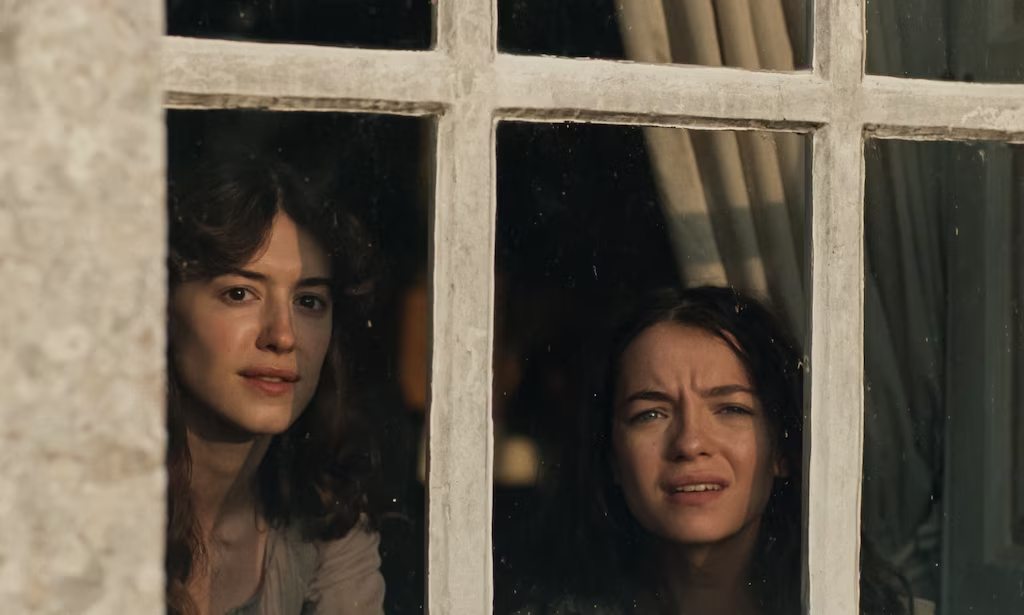
Directed by South African filmmaker Tashin Singh as a London Film School Graduation short film, Sugarcane, Burning is an abstract mediation on lineage and memory while thousands of miles from home. Part of “Ancestral Hauntings: Short Film Programme", the film opens with a title card explaining the passages thousands of Indians took across the ocean to colonial Natal (modern-day eastern South Africa) under indenture during the late nineteenth century.
This passage came with the promise of return to their ancestral homeland. For most, however, that promise was never fulfilled. Set during this colonial time, the film uses silence to say more with what is left unsaid. We follow Mira, a young woman at the precipice of motherhood who reflects on what is lost in her life and what remains, all through finding connection to the land, sea, and her matrilineage.
Sugarcane, Burning feels like watching an oil painting come alive. Shot on 16mm, Singh’s direction creates a haptic image of the sugarcane plantation: the fields feel tight and claustrophobically hot, with low angles and extreme close-ups creating a tense relationship with the land. In contrast, wide shots of the open sea symbolise both a refuge for Mira and an enduring sense of separation from her ancestral homeland.
The film's abstraction occasionally proves too elusive. A young boy (presumed to be the son of a white colonist) offers a gift to Mira as she sows the fields, before he is ushered away. Does this act of compassion suggest he is the father of her child? Or did she fall pregnant before her passage? Mira’s mother certainly condemns what she calls a “half-baked” child earlier in the film, but it is unclear whether Sugarcane, Burning muses on colonial sexual violence, or rather a matrilineage broken by borders. But like the sugarcane fields that must be burned before they can be replanted, Singh successfully shows how inheritance and loss are intertwined.
The Curfew (2025), dir. by Shehrezad Maher
Cut to the modern day, director Shehrezad Maher’s The Curfew shows how inherited colonial legacies can trickle across oceans and through generational gaps. Another in the “Ancestral Hauntings” programme, the short film also muses on silence as a space where colonial trauma can resurface as a spectral force in our modern existence.
The narrative follows Ayaan, who unexpectedly becomes his grandmother's temporary carer, despite being separated by a total language barrier. After suffering a serious stroke, Ayaan’s grandmother must confront digital dependency while she continues to be haunted by her past. She attends remote speech therapy lessons in the day, but by night Ayaan finds her sleepwalking—or rather sleep-crawling—in the hallway outside her apartment.
Her crawling references the “Crawling Order” during the British colonial occupation of Amritsar, which forced all Indians in the town to crawl down a specific street between 6am and 8pm. Those who disobeyed were beaten. Maher channels this sense of omnipresent authority in The Curfew through surveillance camera footage, while Ayaan himself becomes affected by this spectral colonial legacy: after hearing something outside the door, he sees the building’s English-speaking receptionist reimagined as an Indian fruit vendor tirelessly labouring throughout the night.
In this way, Maher subtly shows how a distant, inherited past can seep into a modern existence generations later. The Curfew’s resolution arrives with Ayaan and his grandmother eating discarded melted ice cream together in the hallway after another of her sleepwalking episodes. The pair eat messily with their fingers, spilling the liquid everywhere, suggesting a shared history that remains messy and unfinished.
52 Blue opens LIFF 2026 at BFI Southbank on 9th July, while “Ancestral Hauntings: Short Film Programme” will air at Ciné Lumière on 11th July.