The London Indian Film Festival is Back- And It's Bigger Than the Bollywood You Think You Know
Film & TV1 July 2026
AuthorRiddhima Kaushal
From regional cinema and independent voices to the 25th anniversary of Lagaan, here's a look at the standout films and events at this year's London Indian Film Festival
I
n India, films are rarely just something to watch. They are Sunday afternoons with family, dialogues that somehow become a part of every conversation, and songs you didn’t mean to memorize but know by heart anyways. Yet when Indian cinema is spoken about abroad, the conversation often shrinks to a handful of Bollywood blockbusters, Shah Rukh Khan, colour, spectacle, and not much else. The London Indian Film Festival has spent years pushing against that idea.
This year’s programme once again proves just how many Indias can exist on one screen. Instead of chasing scale, many of the festival’s biggest titles are ones that don’t always find a way into multiplexes, films that exist in the space between art house and mainstream, too specific for wide release and too good to be ignored. The line up is full of regional cinema, independent voices, and documentaries, giving space to voices and languages that don’t always travel beyond their own regions.
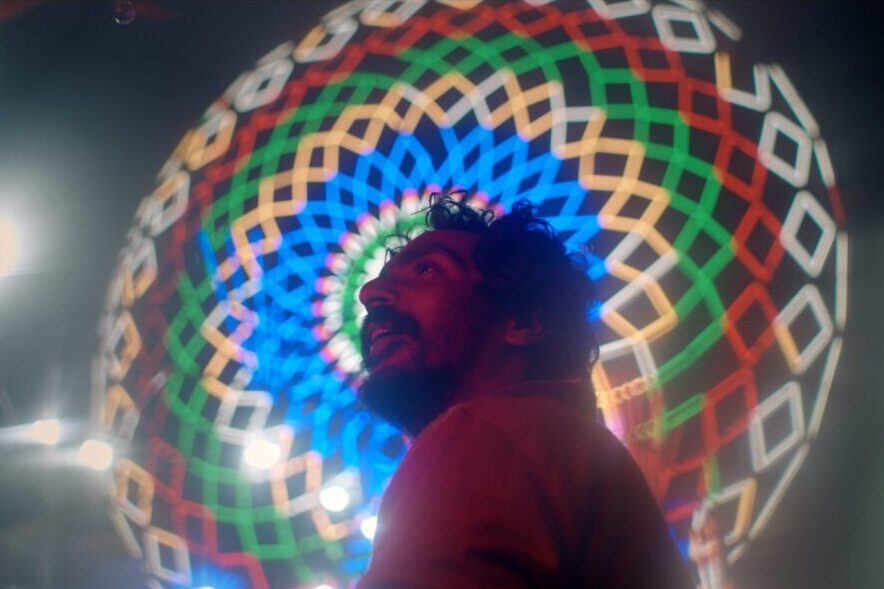
Opening the festival is 52 Blue, directed by Ali El Arabi and starring Adil Hussain and Neha Dhupia. For a festival built on independent cinema, it feels like exactly the right note to begin on. The film follows a young man from a remote coastal village in India who travels against all odds to meet his hero at the 2022 FIFA World Cup in Qatar. Being way more than just another sports underdog story, 52 Blue is a film that is certain to spark conversation and deserves to be experienced by all.
Two of the more talked-about titles this year, Too Desi Too Queer and If I Could Tell You, push the programme into more direct, contemporary territory. Too Desi Too Queer in particular sits in tension with its own title. It engages with queer identity within Indian contexts that are still negotiating visibility and acceptance, communities where being out is not a single moment of liberation but an ongoing, daily calculation. The film doesn’t resolve that tension into a neat conclusion, but it simply places it on screen and leaves it there.
Without giving much away, If I Could Tell You is built around people speaking about things they don’t fully say out loud. Together, the two films feel like different ways of asking what can and cannot be said right now.
The festival isn’t only looking ahead. This year also marks 25 years of Lagaan, with Aamir Khan appearing for a special conversation. Few films feel more appropriate for a festival that sits between Britain and India. A story built around colonial history returning to a London screen, twenty-five years later, says something about how far Indian cinema has travelled.
LIFF is also venturing into new territory with its first AI showcase, led by Shekhar Kapur. At a time when artificial intelligence seems to dominate every aspect of our lives, the festival is not treating it as a gimmick or a threat. Instead, its giving filmmakers the space to test, question and experiment with the technology before the rest of the industry decides what to make of it.
The best film festivals promise that you’ll leave having discovered a film you wouldn’t have found otherwise. Judging by this year’s line-up, the London Indian Film Festival 2026 looks set to do exactly that.