All Vibes, No Plot: Why We Can't Stop Reading the 'Boring Millennial Novel'
Culture1 September 2026
AuthorFaraday Gamble
PhotosMacmillan Publishers | Artwork cherub
Why are we so obsessed with books where seemingly nothing happens? From Jem Calder to Sally Rooney, the rise of the ‘boring millennial novel’ reveals why flawed characters and plotless stories feel so perfectly suited to modern life.
A
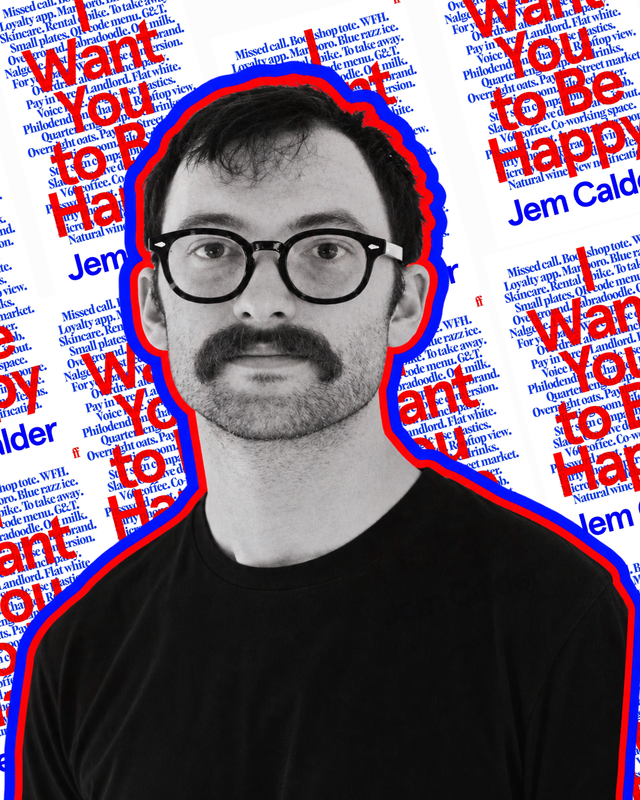
few weeks ago, I had the pleasure of attending a talk with the Debut Author Jem Calder, the writer behind the supposed book of the summer, I want you to be happy. Cool glass of red wine in my hands, a friend at my side, we sat and listened to him talk about prose, about authors he admired, and the characters in his book. But then he began, in reference to a slightly scathing review of his novel, to talk about the idea of boring millennial books, the likes of which BookTok so often refers to as "all vibes no plot”. Calder spoke of Sally Rooney novels, of Coco Mellors writing and the likes of ‘my year of rest and relaxation’, all books I love, that sit pride of place on my make-shift book shelves.
And it posed the question, why do we love these plotless novels and impossibly flawed characters.
Why Do We Love Plotless Novels?
To a certain group, these books hold a lot of appeal, normally aimed at the younger generations, the university graduates, masters students and young professionals still in their entry level jobs. And whilst the characters in these books may stray a little from our real life situations, there is a deeply relatable and personal centre to them, core’s that we see ourselves so well reflected in, an uncanny sense of reliability. These mirror images feel real, authentic and just as flawed.
“These books hold up a mirror to deeply personal experiences and scary feelings” Says Book Influencer, Anna, (@annatheworstbanana). “We as readers enjoy seeing that other people are also sad, scared, overwhelmed, and paralysed by life choices. That other people are experiencing the same depth and complexities of being a human.”
It seems our generation has grown tired of aspirational characters, of the rich and unimaginable centres to these people, their middle class worries and dog-eared ambition for jobs we don’t even recognise. We like these real, flawed and failing characters, and arguably, they are an antidote to the people we see around us, the polished and perfect people on our instagram explore pages, the glossy haired girls in club toilets and their successful boyfriends. We escape into these authentic feeling worlds, where everyone is failing and likeable simply because they are a little bit unlikable.
Not only do the characters offer us respite, but so often these somewhat winding and lyrical plots are an antonym to our real lives, our young adult and childhoods that have seen a war on terror, financial crashes and a global pandemic, many before getting anywhere close to buying a first home. The news now is one of doom and gloom, of raging wars, financial instability and the pressures of modern day lives. Whilst escapism might feel like the obvious choice in the face of such uncertainty, we really want validation. “Books like Want You To Be Happy, perfectly capture the exact thoughts so many of us find ourselves spiralling with in this uniquely modern-era.” explains Zoe Giles, who works in Publishing and boasts a TikTok following of 90K. “[They] turn something that can be quite depressing into stories that make you giggle, relate and feel less alone.”
Are 'Boring Millennial Novels' Really About Us?
On the flip side, our desire for reality and characters that seem so personal could be narcissism, an inability to connect with people we can’t identify with, a consequence of growing up in the dawn of social media. We conducted relationships via text and document our whole lives, our social skills dying the more we scroll and confine our friendships to online spaces. Gone is the empathy we could have for people so different from us, now we are desperate to be reflected in the media we consume, seeking out characters we see ourselves in, and struggling to find common thread between those we don’t. Call it narcissism, call it vanity or an inability to connect, we strive for this mirror image, to give the characters we see ourselves in, happy endings and love. Because if a character we so strongly relate to is worthy of love, perhaps we are too.
The Plotless Novel Is Nothing New
As Anna points out, whilst this sub-genre of literary fiction is experiencing a huge rise in popularity today, such books have existed before this. “Authors have been doing this for years. One very obvious example is many of Jane Austen’s novels, which largely centre around one person’s developing understanding of themselves within the world.” And with the likes of Calder citing Middlemarch as a favourite novel of his, this want for the plotless might be cyclical, a pattern for young people as they enter the adult world- a rite of passage more than a trend.
But these books are here to stay, and so is their best-seller status.